
August 13, 2026
Lean into the magic of Fogust
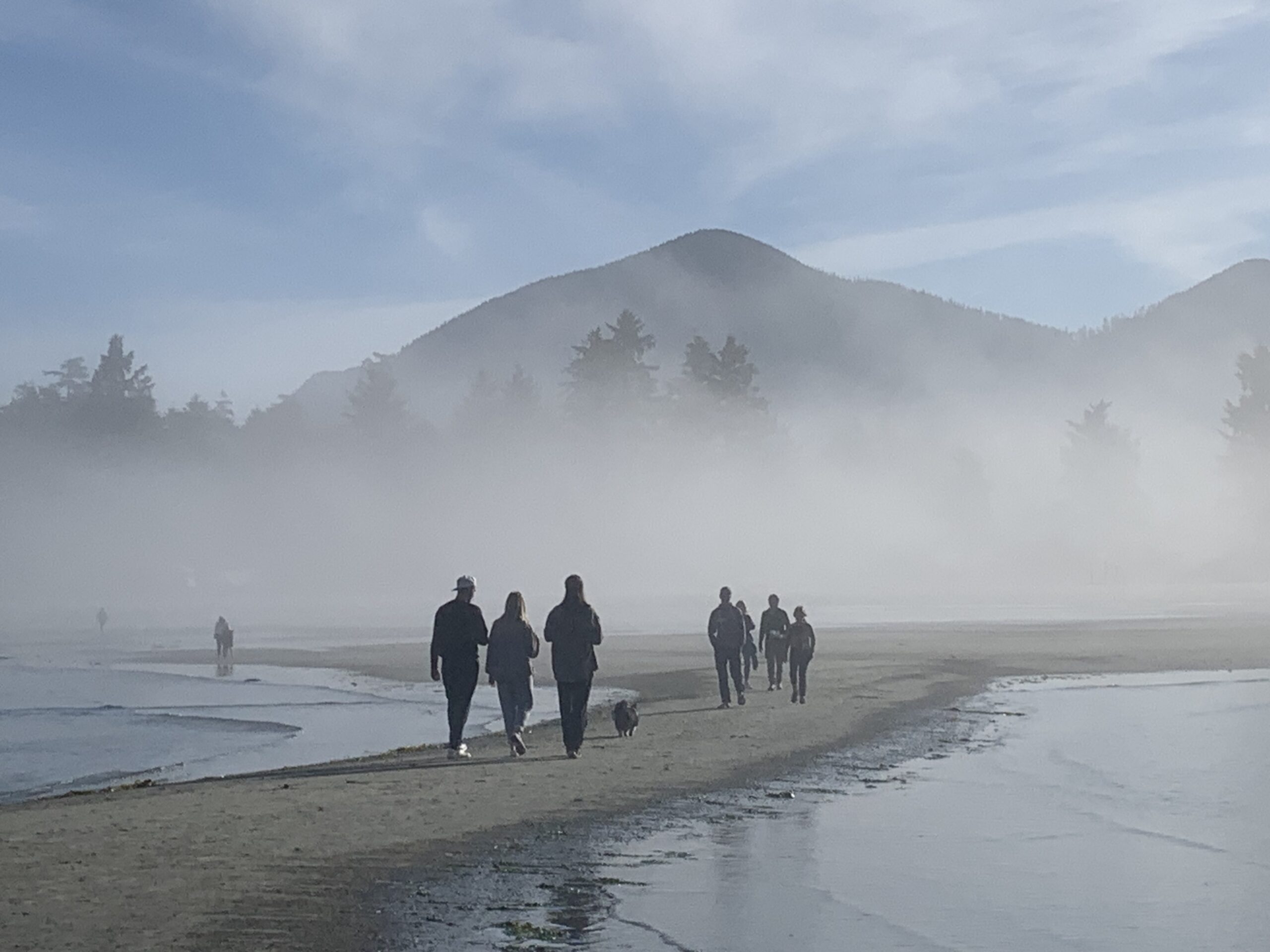
(photo by Erin Linn McMullan)
By Erin Linn McMullan
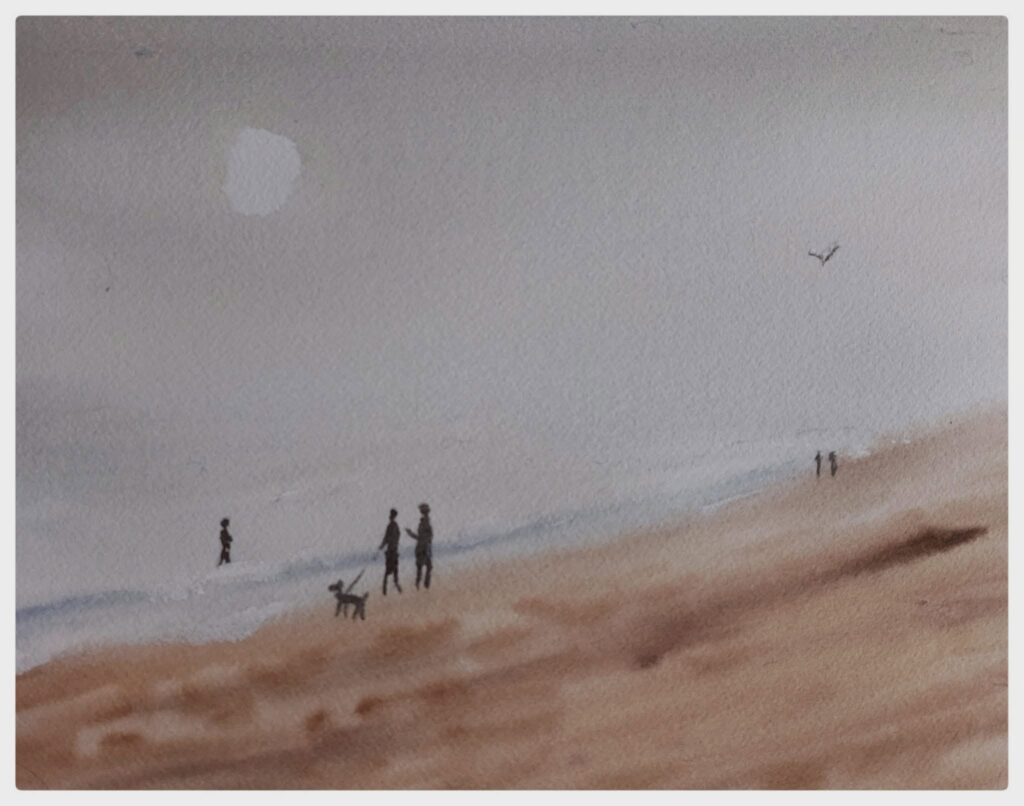
From morning mist cloaking tinwis in mystery to bioluminescence sparkling across dark waters at night, life on the beach is lush and languorous in August. Locally known as “Fogust”, it’s an open invitation to savour these last days of summer. Go at your own pace whether you indulge in a slow intertidal walk, stretch or SUP through “Starfish Alley”, a bracing Pacific plunge or hard-charging the surf until the sun sets in technicolour.
Inspiring Coastal Daytrips
When you stay at oceanfront Tin Wis Resort, an Original Original and Authentic Indigenous, within ƛaʔuukʷiʔatḥ Tribal Parks, an abundance of inspiring coastal day trips and family-friendly activities are easily accessible.
Encourage your family’s curiousity
A short drive down the highway in Yuułuʔiłʔatḥ territory, discover Canada’s first collect-and-release aquarium fed by flow-through Pacific waters. This recirculating system helps its visiting marine residents thrive before the public community release—this year on December 5, 2026.
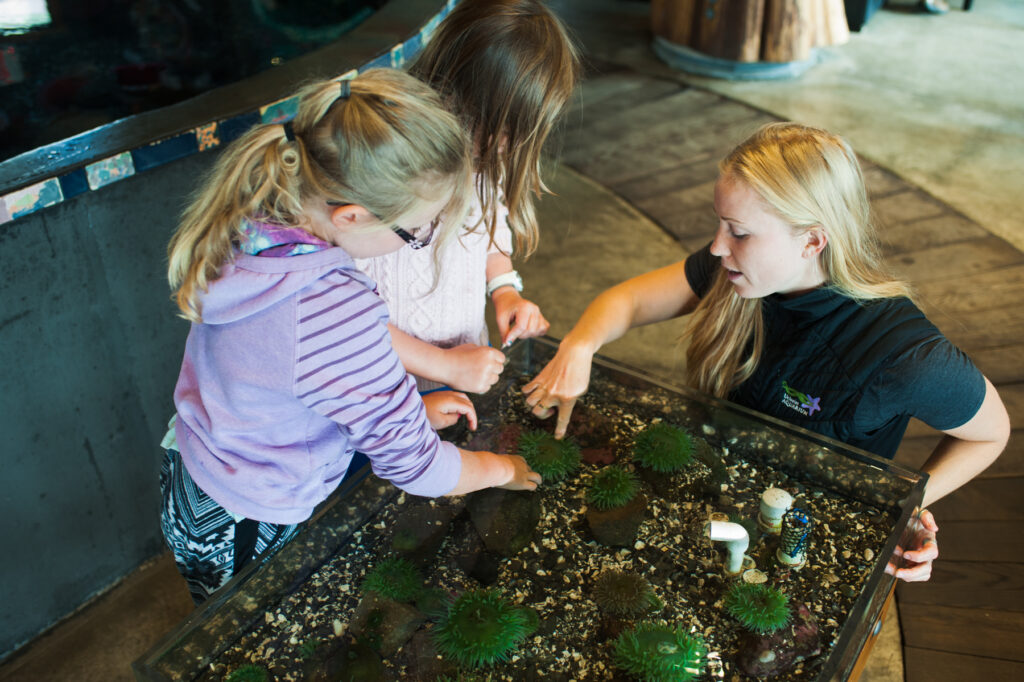
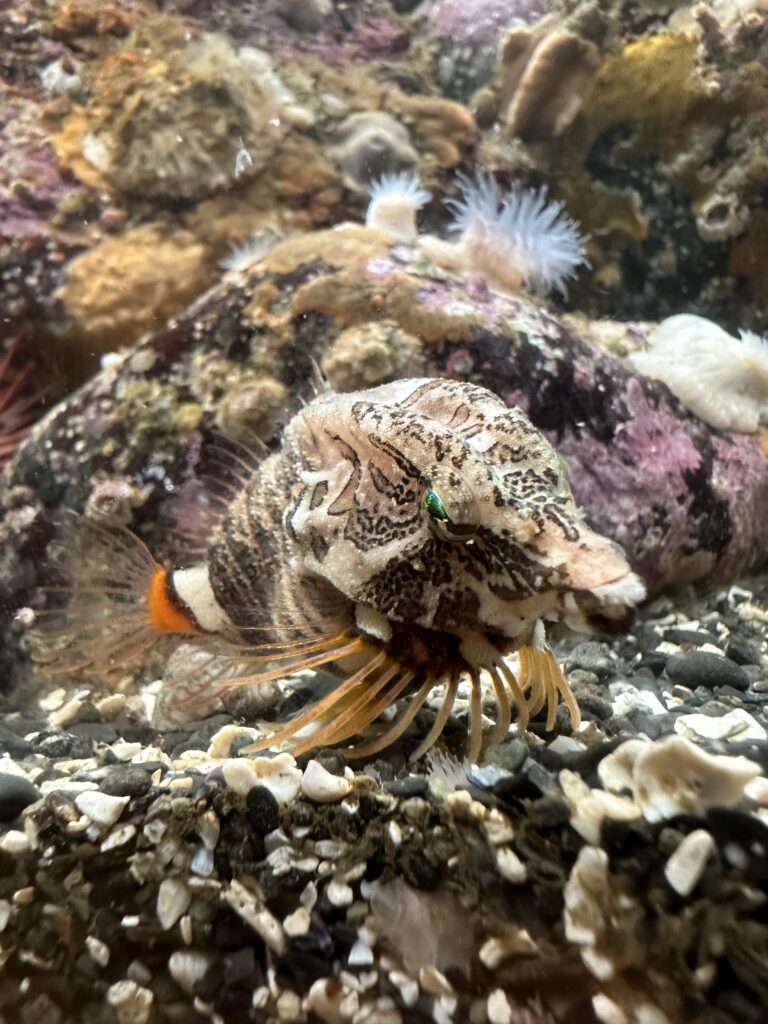
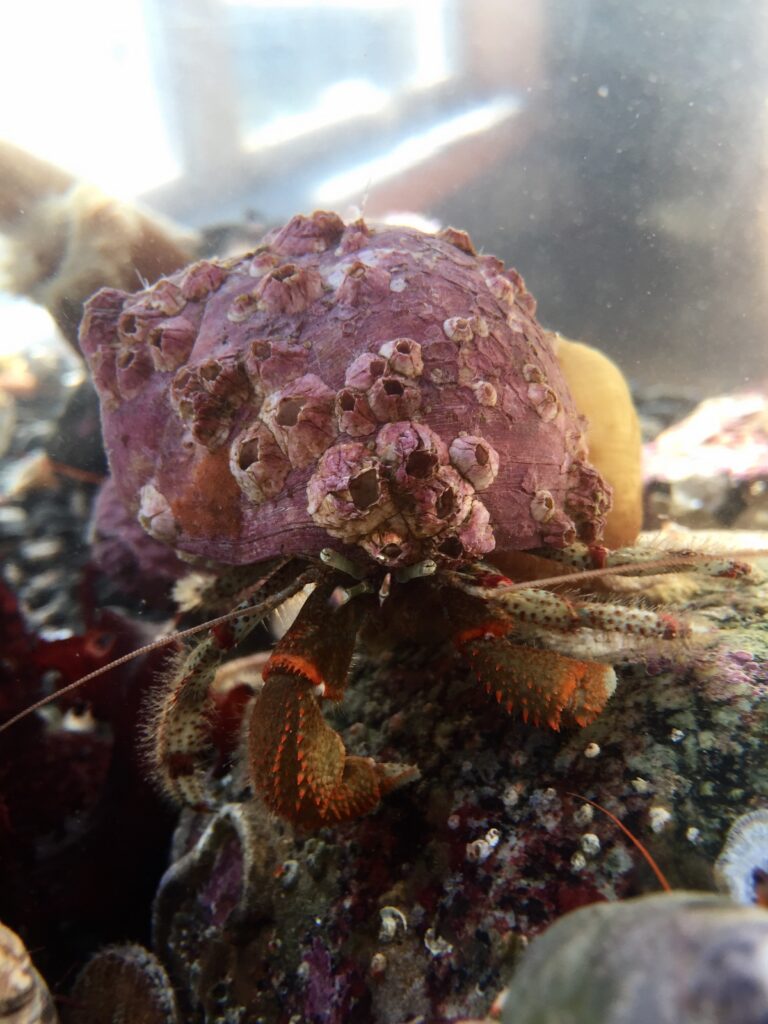
“Here are five fascinating creatures at the Ucluelet Aquarium this season, and animals you may encounter on your next tide pooling adventure,” shares curator Britt Buirs.
Red Turban Snails are the lawnmowers of the rocky shore. Using their ribbon-like tongue (called a radula), they scrape algae from rocks, helping to keep intertidal habitats healthy and balanced. They are one of the aquarium’s team allies—helping to keep our exhibits clean! Their impact continues long after their lives end. Their shell becomes part of a constant cycle of reuse—picked up by hermit crabs, sheltering small organisms, or slowly breaking down to contribute calcium back to the ocean ecosystem.
Hermit crabs are one of the coast’s best examples of “nothing goes to waste”. What makes them especially fascinating is how tightly their lives are linked to other species. Unlike other crabs, they can’t grow a hard shell of their own. Instead, they rely entirely on shells left behind by other animals—most often snails. As they grow, they moult their exoskeleton and have to find larger shells to move into. Their entire life is a cycle of reuse, swap, and adaptation. Some species are very particular about the shells they use. A favourite at the aquarium this season is the black-eyed hermit crabs, who show a strong preference for Moon Snail shells—a great choice for a crab that needs both room to grow and protection against predators. That’s why leaving natural treasures on the beach is so important—you never know who might need them next.
Ochre Sea Stars are some of the most important predators in the tide pool by keeping communities balanced. They help prevent any one species from taking over, acting like slow-moving ecosystem regulators, constantly reshaping where energy flows in the intertidal zone—deciding who gets space, and who doesn’t. When exploring tide pools, avoid moving or lifting sea stars, they could be in the middle of a meal! Sometimes the most exciting moments happen when we slow down and observe nature doing what it does best.
The Striped Surf Perch at the aquarium have been especially exciting lately—two females recently gave birth to a school of tiny babies! Unlike most fish, striped surf perch don’t lay eggs. Instead, they give birth to fully formed live young, making them one of the few local fish species with this remarkable reproductive strategy.
Grunt Sculpins are experts in turning leftover architecture into shelter. One of their favourite hiding spots is inside empty Giant Acorn Barnacles. Barnacles spend their lives building strong homes attached to the rocks. After they’re gone, those same homes can provide protection for a completely different animal. The coast is full of these ecological hand-me-downs. Nothing goes to waste, and every piece of the ecosystem has value long after its original builder is gone.
“Some of these animals are part of the aquarium’s touch exhibits,” explains Britt, “where visitors can gently interact with animals under the guidance of Aquarium staff. These hands-on moments are designed to build curiosity, connection and compassion—learning how to touch carefully and respectfully, actions you can bring to your next tide pooling adventures!”
Explore the Salmon Trail
Learn more about suuḥaa (Pacific Salmon) with six family-friendly self-led summer activities along the Salmon Trail from Ucluelet to Tofino, thanks to a collaboration between Ucluelet Aquarium and Redd Fish Restoration Society.
Check the events schedule Here.
Hike the Wild Pacific Trail (WPT)
From the Lighthouse Loop to the awe-inspiring Rocky Bluffs overlook, Ucluelet’s gem, the Wild Pacific Trail (WPT) offers an incredible opportunity to view open ocean and spot sea lions playing in the whirlpools. The rainforest you enter at Ancient Cedars celebrates this “tree of life” so vital to nuučaanuł coastal nations. Gaze in wonder at two Western Red Cedars estimated to be over 800 years old, one with a base exceeding 12 metres. Yuułuʔiłʔatḥ Elders were consulted when designing this trail, contributing to interpretive panels about cultural practices and CMTs (culturally modified trees).
Learn more about interpretive Nature walks Here.
Visit Cedar House Gallery
While you’re in Ucluelet, be sure to visit Cedar House Gallery (Friday through Monday 11 a.m.–4 p.m.), a nuučaanuł community carving hub where lively conversation and a pot of coffee is always on.
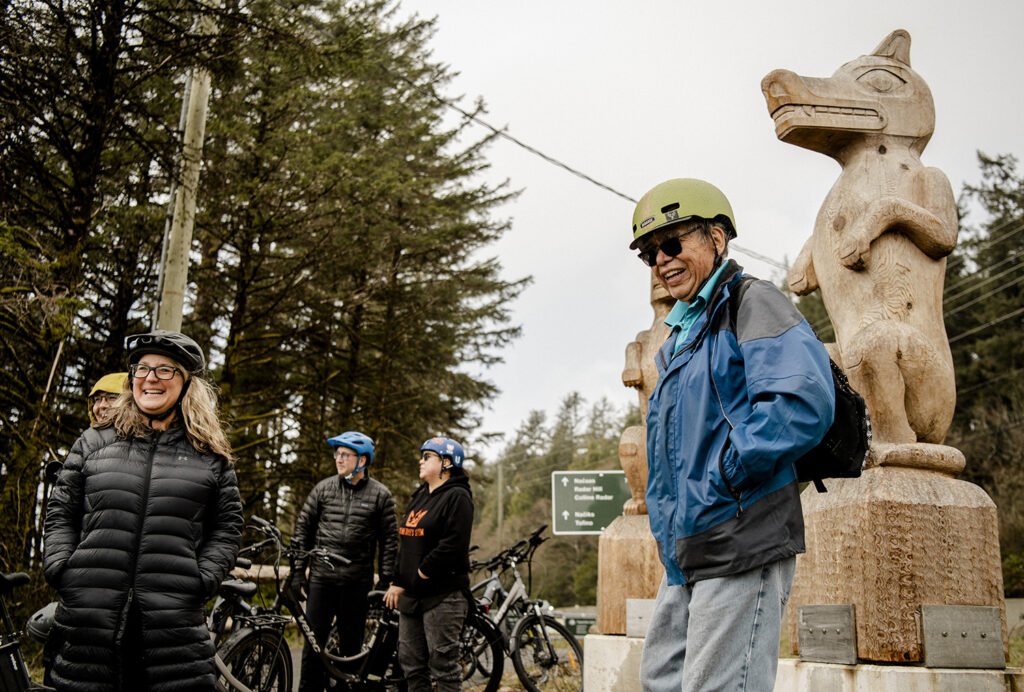
ƛaʔuukʷiʔatḥ gallery owner and artist Tleḥpik Hjalmer Wenstob carved the cedar ʔiiḥtuup (humpback whale) č̓iin̓uł (totem pole) edging the dunes at tinwis to honour a living connection to ƛaʔuukʷiʔatḥ whaling history and this ancestral summer village site.
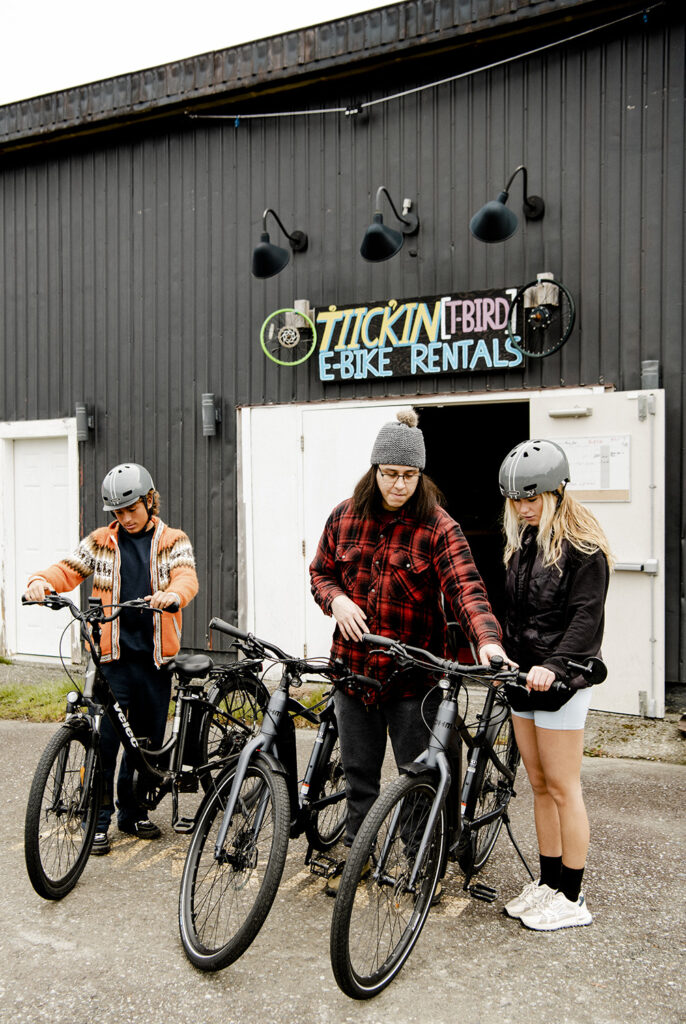
Stop by the junction to rent an e-bike
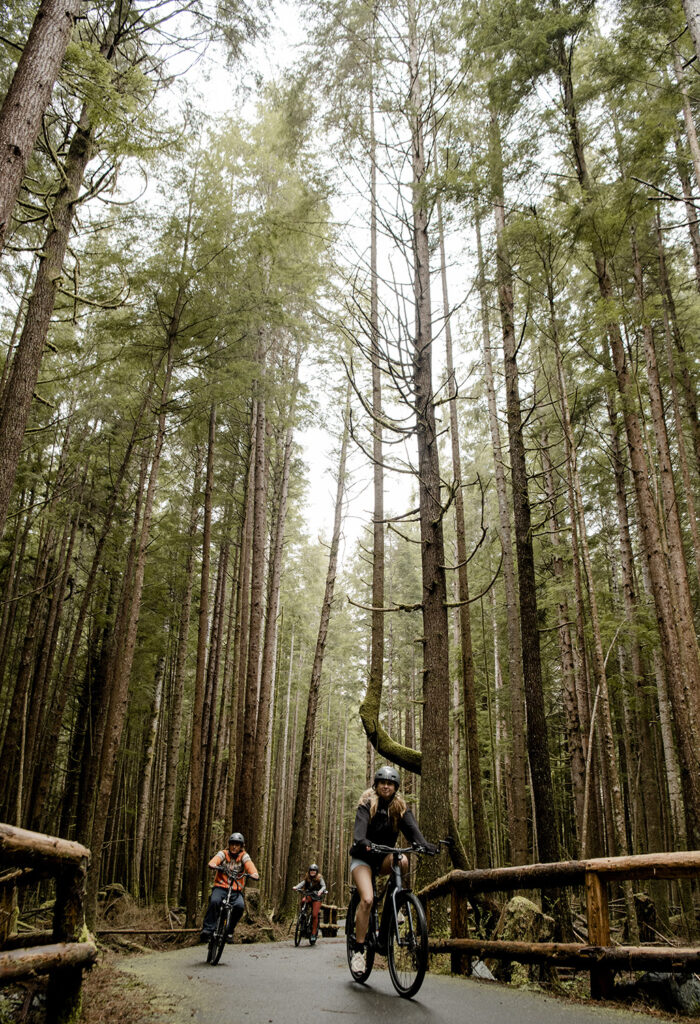
Our offsite partner, T̓iick̓in (Thunderbird) EBike Rentals, Canada’s first Indigenous-owned Ebike rental company is conveniently located at the Hwy 4 junction between Ucluelet and Tofino.
It’s a fantastic way to enjoy the rainforested ʔapsčiik t̓ašii, then park and explore the hiking trails and life-giving beaches and within the Indigenous co-managed Pacific Rim National Park Reserve.
Journey to Mux̣šiƛa Hot Springs
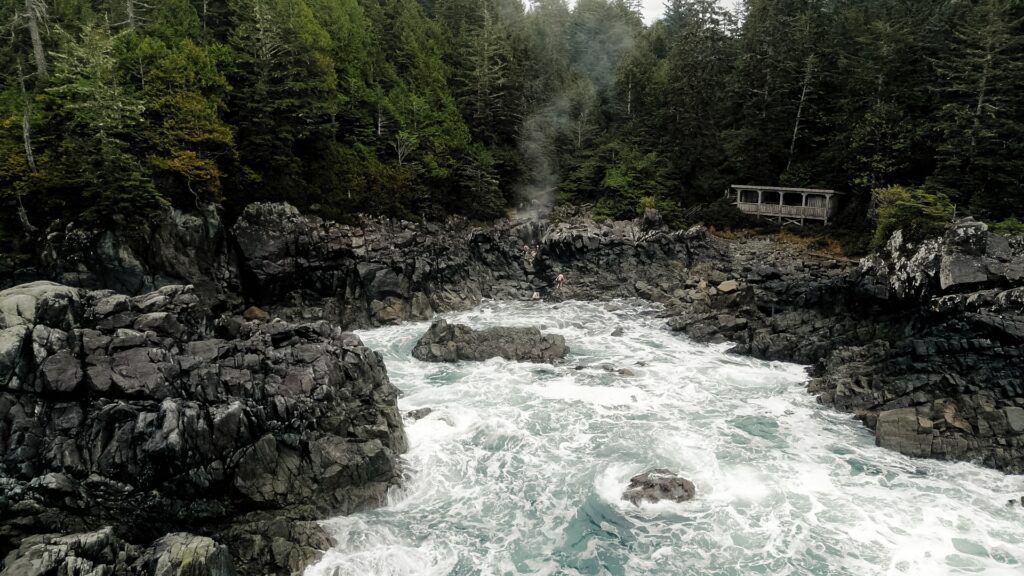
From downtown n̓ačiqs (Tofino), embark on the experience of a lifetime with our offsite partner, ʕaḥuusʔatḥ-owned Ahous Adventures. The journey to Mux̣šiƛa Hot Springs in Nism̓aakqin Marine Park northwest of Flores Island, combines the best of everything: ocean travel with marine wildlife sightings, a boardwalk hike through old-growth rainforest, and geothermal waterfalls and pools sculpted into the rocky headlands. One sweet spot even allows you to soak amidst warm geothermal and cool tidal waters overlooking the ocean.
Read more about this Indigenous-led eco-tour Here.
Enjoy a bird’s eye view of the coast
For a breathtaking adventure in under an hour, depart from First Street dock in a floatplane for the Sand to Summit Tour with our offsite partner Tofino Air. Fly over secluded inlets to the Vancouver Island Range in Strathcona Provincial Park then circle back across open coastline.
You don’t have to go anywhere
If you’re crafty, grab a beach blanket or cozy Adirondak chair and settle in to crochet or knit, sketch or read, or simply dream to the melody of the surf. Unplug and tune into the pulse of Nature on tinwis.
Linger for sunset and stargazing
With uninterrupted oceanic skies, our clay firepits on the dunes are your front-row seat to showstopping sunsets and spectacular skygazing as t̓at̓uus (stars) and the Perseid meteor showers spread across the hiłaayił (sky). Stop by our front desk to rent a propane fire pit overnight.