
July 24, 2026
5 MARINE CREATURES TO WATCH FOR
by Erin Linn McMullan
If you’ve ever experienced the magic of documentarian Craig Foster’s My Octopus Teacher or read his Amphibious Soul, you’ve glimpsed the wonder and importance of reconnecting with Nature. As he points out, getting to know these marine creatures creates empathy and a desire to protect the vulnerable kelp sea forest which supports such abundant biodiversity. From cephalopods like the octopus, to a myriad of invertebrates and fish, to whales and coastal animals, all intricately interwoven within the “ecological intelligence” of the biosphere.
Kelp sea forests cover 25% of global coasts, sequestering blue carbon and protecting coastal ecosystems from swell and storm damage amidst rising seas. Eighty percent of the world is protected by Indigenous Peoples, Foster underscores, while representing five percent of the global population.
Here on the west coast of Vancouver Island, where the lands and waters have been stewarded by the nuučaanuł Peoples since time immemorial, there are collaborative kelp research and restoration efforts within both Clayoquot and Barkley Sounds. The reintroduction of sea otters—a keystone species—after their extirpation near the turn of the 20th century, would also have a profound impact.
Highlighted here are five marine creatures, including the “remarkably bright” octopus and ocean gardening sea otter, to get to know and care for within the web of west coast life:
- tiiłuup (Northern Giant Pacific Octopus)
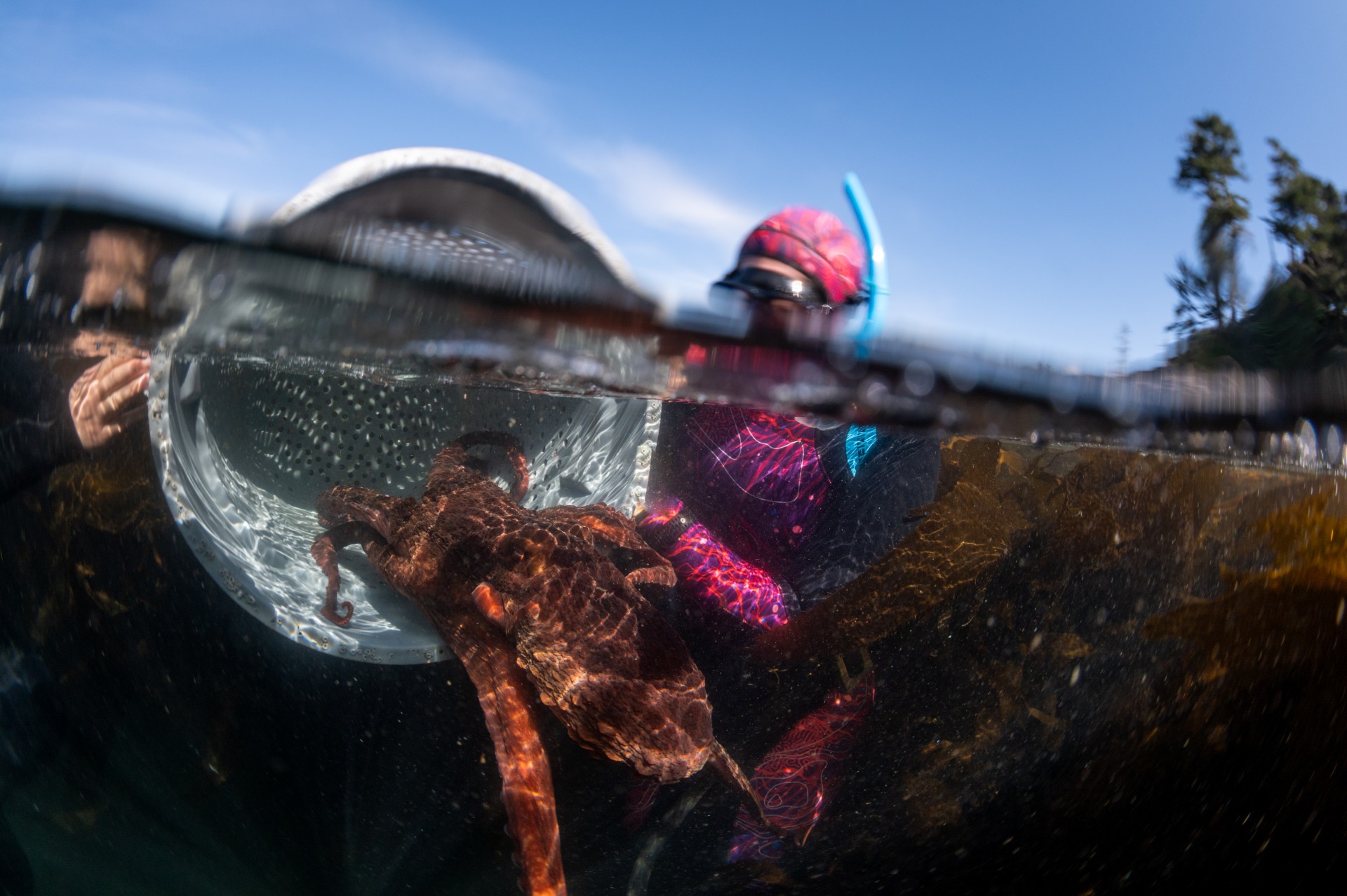
Nocturnal tiiłuup maximizes its short lifespan—3 to 5 years—with an accelerated capacity for learning and problem solving. Cephalopod neurogenesis enables the octopus to produce and add neurons, with 60–70% of its brain power distributed in sensory receptivity across its tentacles: increasing taste, touch, and decision-making. Despite being colour-blind, they brilliantly camouflage themselves within the kelp sea forest and have been documented using shells as tools to aid in that disguise and as a shield against predators.

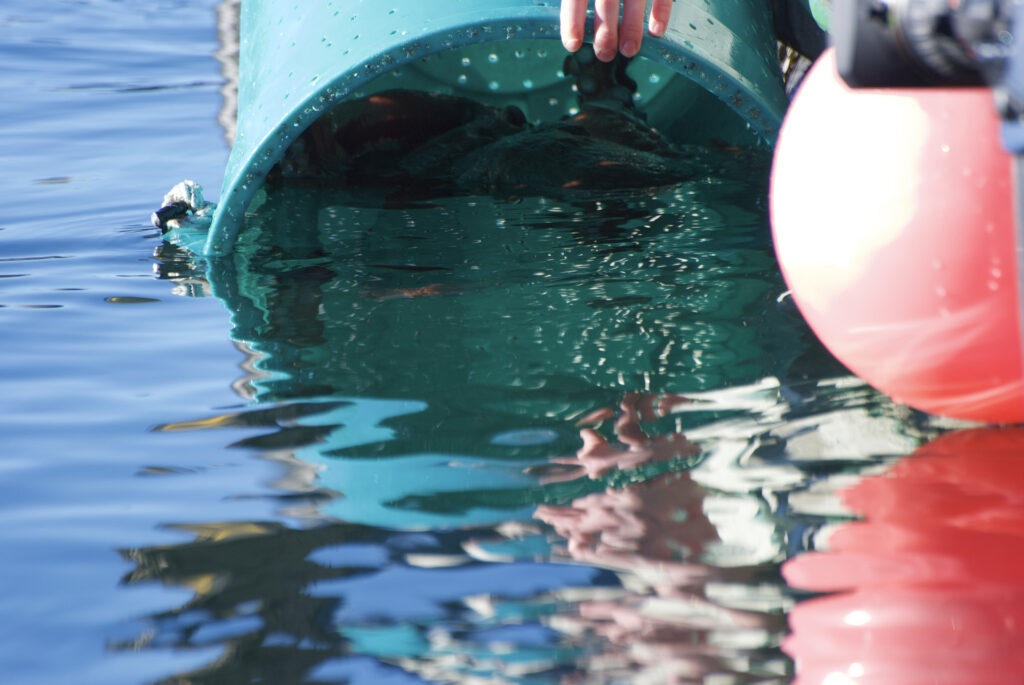
“This year’s resident octopus, Rhubarb, has already been released from the Ucluelet Aquarium. The aquarium typically collects a Giant Pacific Octopus for opening in March and then returns her before the summer. A new exhibit was recently donated to the aquarium by the film production company for Netflix’s Remarkably Bright Creatures. The Ucluelet Aquarium is currently fundraising to build this new tank into their systems and create an exhibit around it.”
Learn more about the Northern Giant Pacific Octopus Here and plan your visit to Ucluelet Aquarium Here.
- k̓ʷak̓ʷaƛ (Sea Otter)
This keystone species has made a remarkable recovery on the Pacific Northwest coast, and along with them, the kelp sea forest–an important source of blue carbon. The same kelp they wrap their single pup in while harvesting food.
Consuming urchins which when overpopulated create underwater barrens, k̓ʷak̓ʷaƛ are considered ocean gardeners, and the only marine mammal to use tools – cracking open shellfish with a rock which may be carried in an underarm pocket, sometimes for life. Powerful back feet propel them through the sea where they can hold their breath for up to five minutes underwater.
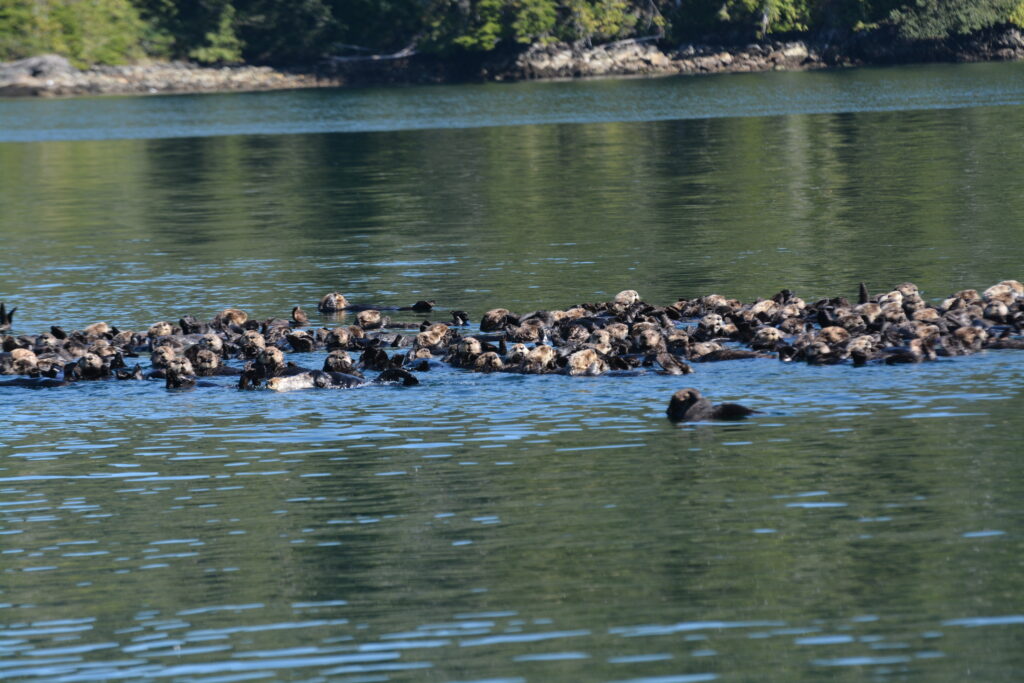
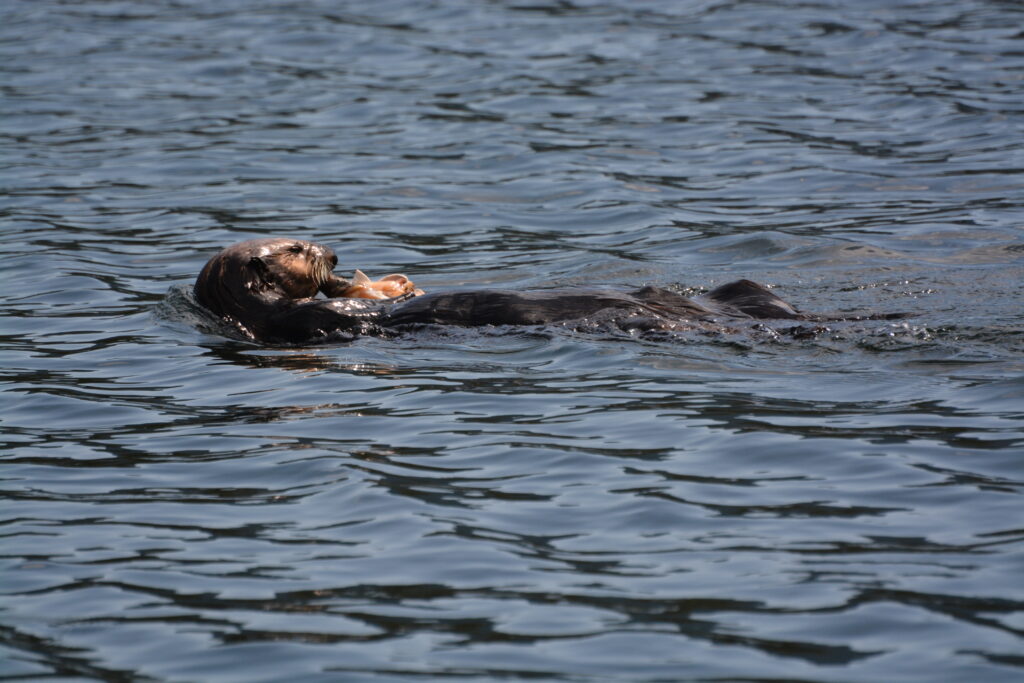
Because they spend most of their life on the ocean, you’re most likely to spot a raft of social sea otters out on the water. A buoyant golden coat, with a density of a half-million to a million hairs per square inch, keeps them afloat.
That same “magical coat” made sea otters a target for European and Russian commercial trade beginning in the 1700s and by 1929, they were completely extirpated from the BC Coast.
They were reintroduced on the northwest coast of Vancouver Island 40 years later, from 1969–1972, when 89 sea otters were translocated from Alaska. While today there are an estimated 4,000 mature animals, they remain designated a species of special concern.
Learn more about sea otters Here and book an Indigenous-led eco-tour Here.
- hicswin (Pacific harbour porpoise)
The symphony of a pod of hicswin surfacing in synchrony up Lemmens Inlet is an experience you will never forget. Kayaking through the fjord beneath the steep rainforested slope of Wanačas Hiłḥuuʔis (Meares Island), your paddle dips in rhythm with their percussive concert. Preferring areas with strong current, Pacific harbour porpoises emit high frequency “click trains” underwater, using biological sonar to navigate and hunt, and possibly to avoid kakaw̓in.
A species of special concern, porpoises, which have been described as “sentinels of ocean health”, are “toothed whales” more closely related to narwhals and Beluga whales than to dolphins.
Learn more about Pacific harbour porpoises Here and kayak with a Tla-o-qui-aht Tribal Parks Ally Here.
- tukuuk (California and Steller or Northern sea lions)
Both Clayoquot and Barkley Sounds offer habitat for resident Steller sea lions as well as seasonal haul outs for California sea lions migrating up the coast from Baja California in Mexico—some even traveling north as far as Alaska. The easiest way to tell these pinnipeds apart is to listen for the Californian’s vocalizations—resembling a raucous laugh like they’re telling a good joke over a poker game.
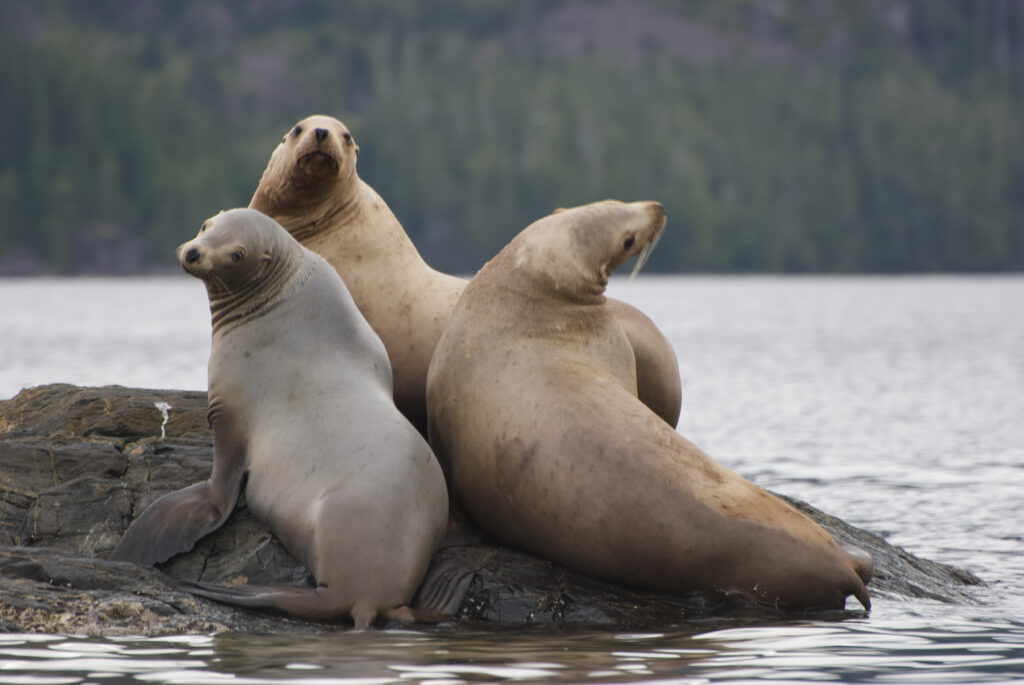
They also differ in size, colour, and the shape of their heads. Stellers are significantly larger, with males up to 2,500 lbs and 11 feet long vs. up to 850 lbs. and 7 feet. Reddish to blonde fur rather than Californians’ chocolatey-brown. A blunt face compared to Californians’ shorter bear-like snout.
Favourite local viewing spots include: hauled out on docks fronting Ucluelet Harbour; on rocky headlands or surfing off c̓icʔiiʔis (Combers Beach) within the Indigenous co-managed Pacific Rim National Park Reserve; and congregating within Clayoquot Sound’s remote passages.
Learn to tell them apart Here and book an Indigenous-led wildlife tour Here.
- kakaw̓in (Biggs Orca)
kakaw̓in travel in family pods led by a matriarch, although occasionally there is a lone orca like Rainy (T011)—at 8.3 meters (27.25 feet) considered the biggest in west coast waters. Often you hear them before you see them with a dramatic exhalation of breath carrying across the water.
This “toothed whale”, however, is considered the largest member of the oceanic dolphin family. Individuals are easily identified by the distinctive size and shape of their black dorsal fin and pigmentation of their white saddle patch.
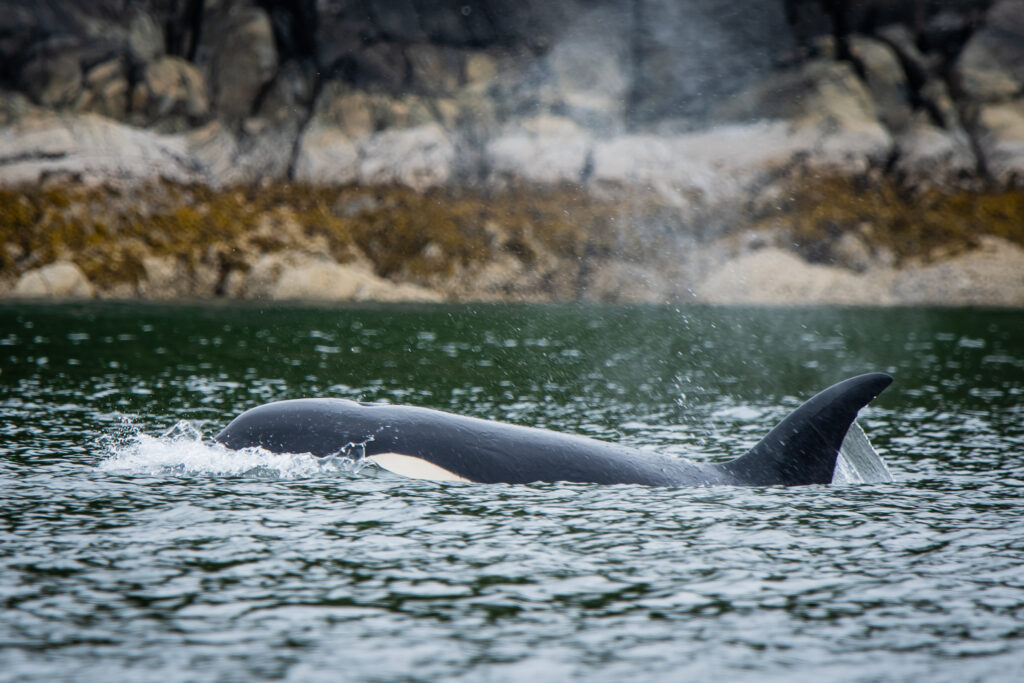
kakaw̓in are a keystone species keeping the balance of nature. Fastest of the marine mammals, they sometimes work together to hunt, using echolocation: clicks, whistles and pulses.
While population research by biologist Michael A. Bigg stopped the practice of aquarium capture in 1976, and safe viewing distances have since been established, their protection is enshrined in Nuučaanuł law.
As this story map, chronicling 30 years of research in Clayoquot Sound, points out, “kakaw̓in and qwayac̓iik (orcas and wolves) are not to be hunted or disturbed, but given right of way and protected in nuučaanuł Indigenous Law.”
View the story map Here and book an Indigenous-led whale watching tour Here.