June 20, 2026
Learn More About ƛaʔuukʷiʔatḥ Living History
By Erin Linn McMullan
June ushers in summer and a celebration of National Indigenous History Month. Each June 21st during summer solstice, we celebrate National Indigenous Peoples Day in response to a call for a day of solidarity by the Assembly of First Nations in 1982 — now nationally recognized since 1996.
Here on the west coast, Indigenous-led advocacy ensures the continued nuučaan̓uł stewardship of Clayoquot Sound practiced since time immemorial with new milestones in its protection and the restoration of place names.
In 2026, ƛaʔuukʷiʔatḥ, ʕaḥuusʔatḥ,and Hesquiaht Peoples increased forest management in addition to the 2024 designation of Indigenous-led conservation areas across 76,000 hectares in a collaboration between ƛaʔuukʷiʔatḥ and ʕaḥuusʔatḥ with the province of BC.
ƛaʔuukʷiʔatḥ Tribal Parks now encompasses the entire ḥaḥuułi with the recognition of ḥačxwiqaq (deep ocean) Tribal Park in 2024 during its 40th anniversary.
This month is your invitation to engage respectfully with ƛaʔuukʷiʔatḥ living history when you visit n̓ačiqs (Tofino) by taking the ʔiisaak Pledge.
Restoration of tinwis beach name
In 2025, the name of tinwis Beach, briefly known as MacKenzie Beach, was restored, acknowledging this important historic Tla-o-qui-aht summer village site where whales were anchored in these “calm waters” before being harvested at Echachis and distributed to the community. ƛaʔuukʷiʔatḥ interdisciplinary artist Tleḥpik Hjalmer Wenstob carved a diving ʔiiḥtuup (humpback whale) č̓iin̓uł, installing this house post style panel oceanfront where once č̓iin̓uł would have been plentiful.
“It’s such an important part of our whaling history,” said Hjalmer, “it should be there as it was in the past when our canoes come in.”
Across the lawn, an over 200-year-old red cedar dugout canoe also serves as a monument to nuučaan̓uł whaling culture.

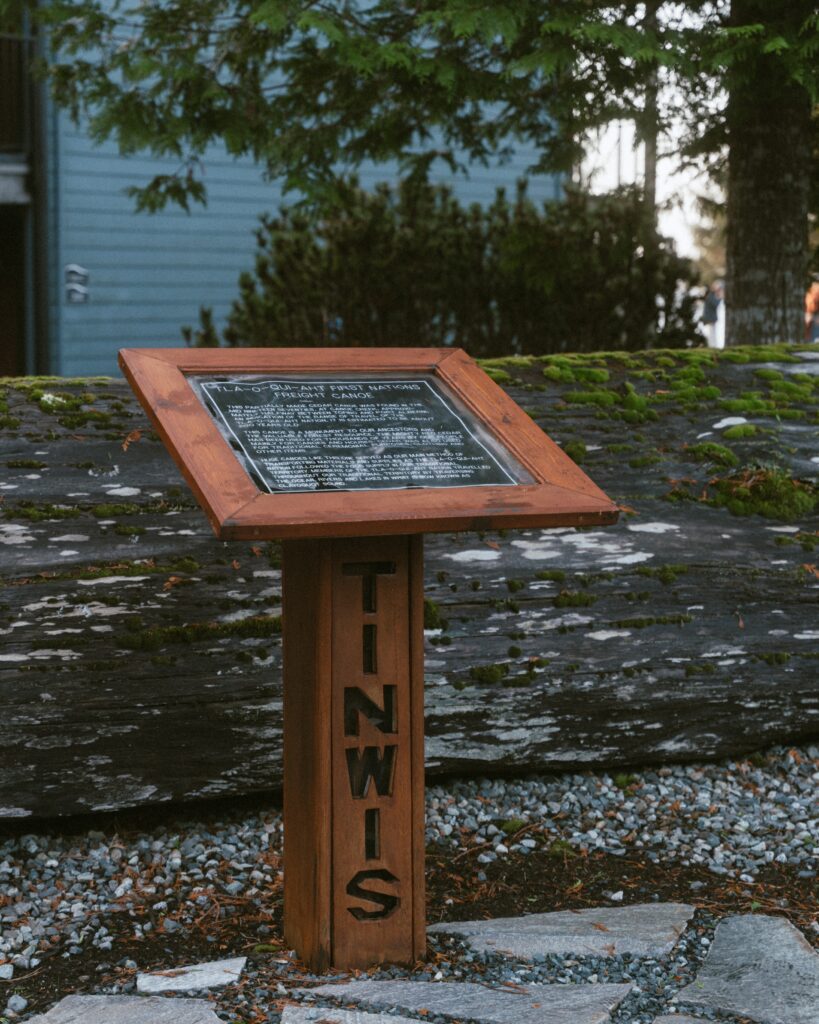
Learn more about the whale č̓iin̓uł (2026) Here and about ƛaʔuukʷiʔatḥ “life-giving beaches”, including tinwis Here.
ƛaʔuukʷiʔatḥ art
Facing oceanfront at ƛaʔuukʷiʔatḥ owned Tin Wis Resort, an Original Original and Authentic Indigenous, two powerful č̓iin̓uł keep vigil. Tiičswina, We Survived! (March 29, 2013) remembers all the children who survived and those who were lost in the Indian Residential School system and Maht-Mas-Uuthluuk—“The Chief that looks after his People” (August 27, 2025), honours Raymond Hiyoueah Seitcher.
Integral to the Nation’s revival of the arts, č̓iin̓uł carrying “beautiful histories” can be found throughout the ḥaḥuułi. In downtown n̓ačiqs, Joe David’s č̓iin̓uł (September 7, 2018) was gifted to Tofino in the spirit of moving forward together.
Take a self-guided art walk Here.
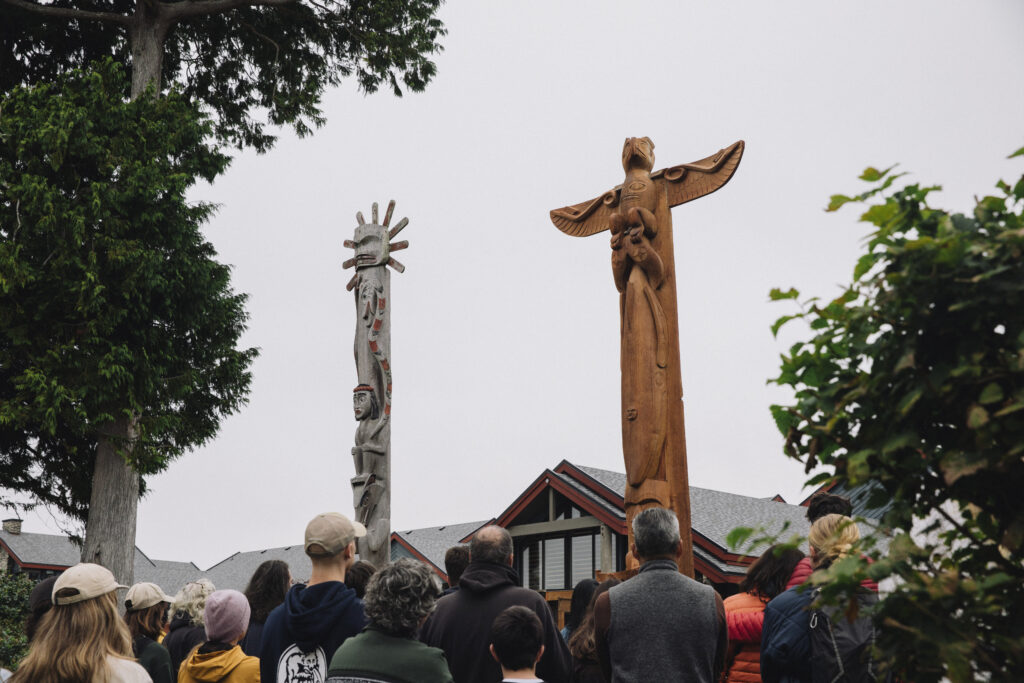
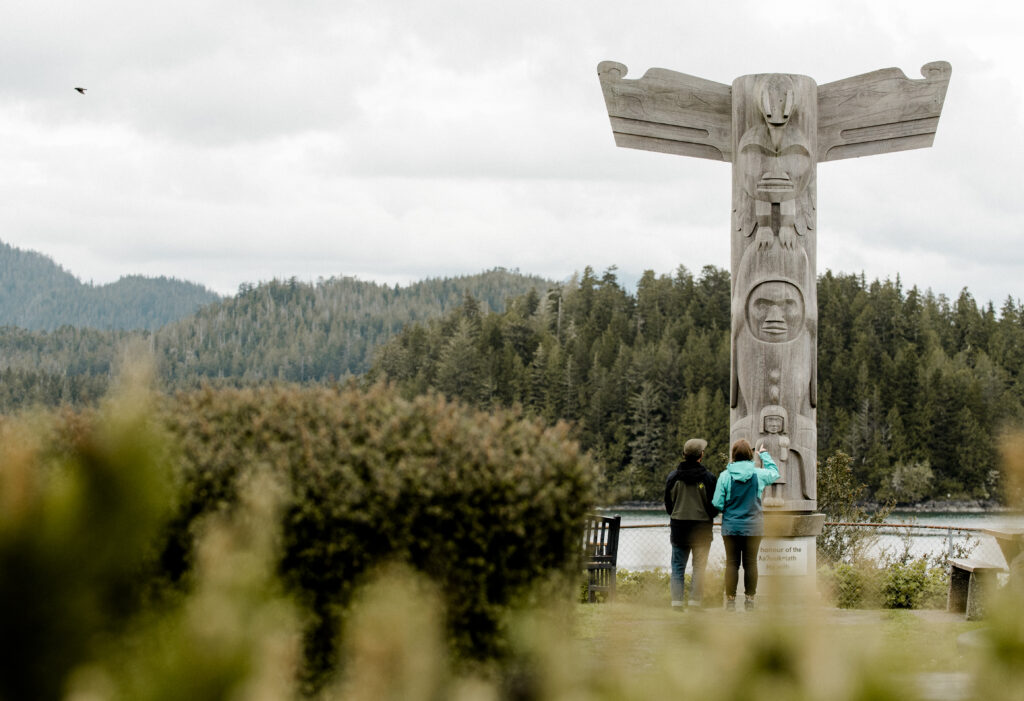
Tin Wis 10-in-10
The Tin Wis 10-in-10 is a visionary program strengthening the resort’s presence as a cultural hub and campus supporting leadership for ƛaʔuukʷiʔatḥ entrepreneurs. It’s overarching goal: achieving 10% ƛaʔuukʷiʔatḥ-led tourism within the ḥaḥuułi in the next decade.
A new carving shed provides space for carvers practicing a timeless art while an artist callout anticipates a number of interior house posts as cultural pillars for the newly renovated conference centre.
This means a more deeply resonant experience when you visit from a new interpretive panel describing its history, to increased ƛaʔuukʷiʔatḥ signage, to Indigenous plant restoration from the rainforest down to the dunes.
This “calm beach” makes tinwis ideal for family-friendly surf, sauna, and beach yoga sessions with Allied onsite partners aligned with ʔiisaak values.
Experience ƛaʔuukʷiʔatḥ hospitality at your home-away-from-home Here.
ƛaʔuukʷiʔatḥ language
The revitalization of ƛaʔuukʷiʔatḥ language is reflected in the restoration of place names like tinwis, in interpretive trail signage enroute to ƛaakašiis—“the place where whales stand on the beach” (aka Tonquin Beach Park), and signage in the aisles of Allied Tofino Co-Op Food Store.
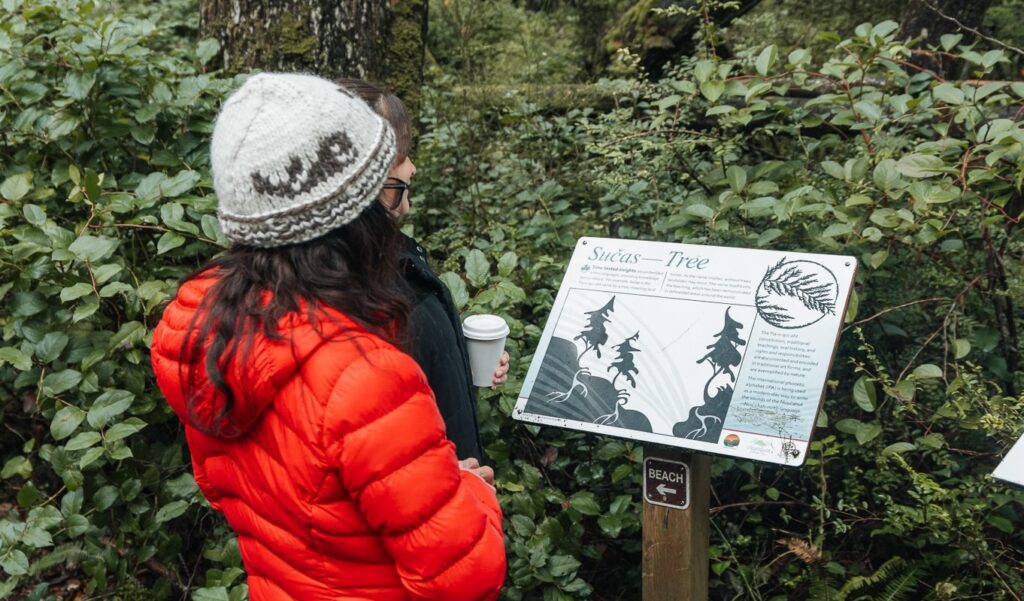
Within the Nation, the ƛaʔuukʷiʔatḥ language department offers lessons and online resources. Youth programs like mułaa rising tide surf team help lift nuučaan̓uł youth up by connecting them to this Indigenous sport, while sharing surf terminology and maps of surf breaks in their own language.
Language is an essential part of the ongoing commitment to identity and cultural continuity and welcomes you to engage with a deeper understanding of this place.
Visit the story map for place names and pronunciations Here.
Recommended ƛaʔuukʷiʔatḥ books
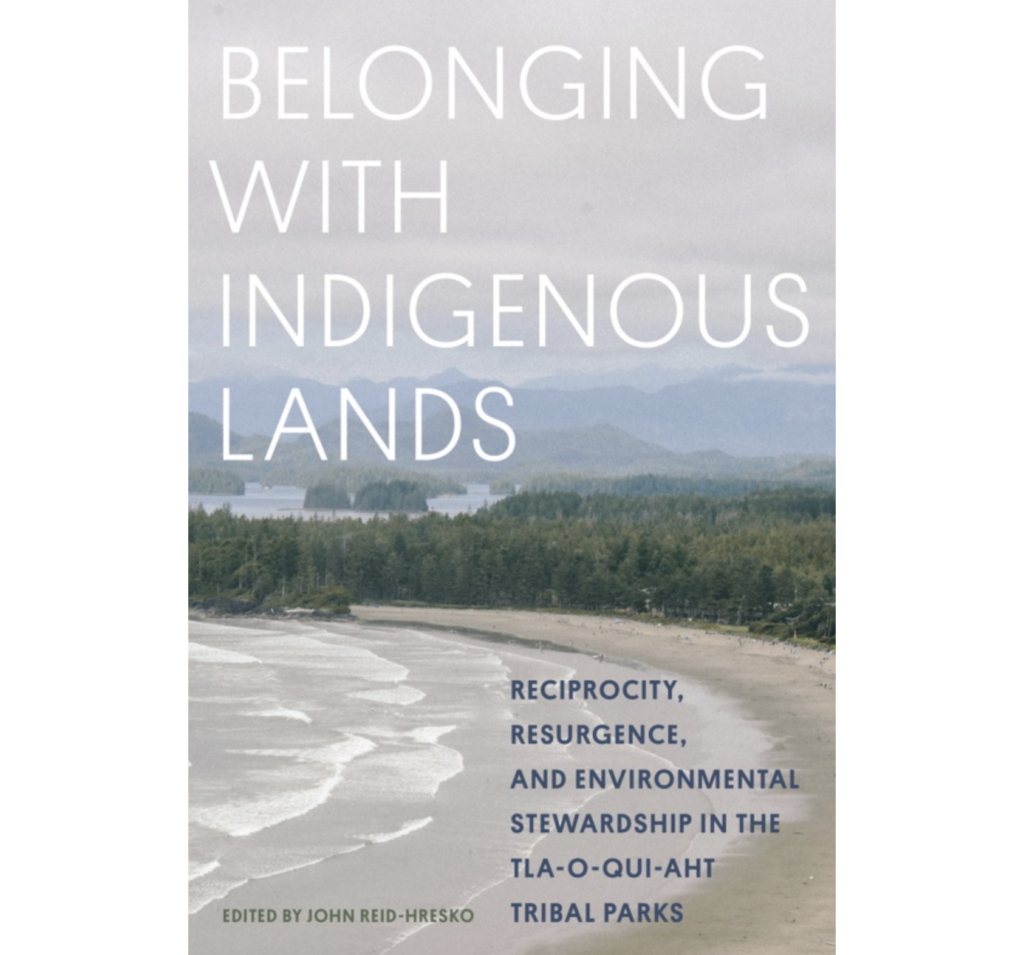
Belonging with Indigenous Lands: Resurgence, Reciprocity, and Environmental Stewardship in the Tla-o-qui-aht Tribal Parks (2026), John Reid-Hresko, Ed.
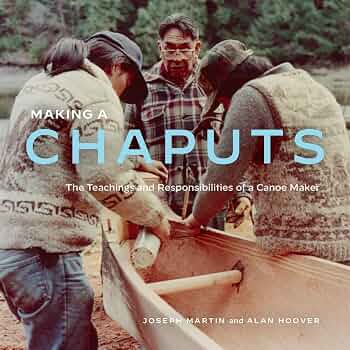
Making a Chaputs: The Teachings and Responsibilities of a Canoe Maker (2022)
by ƛaʔuukʷiʔatḥ Master Carver Joe Martin and Alan Hoover.
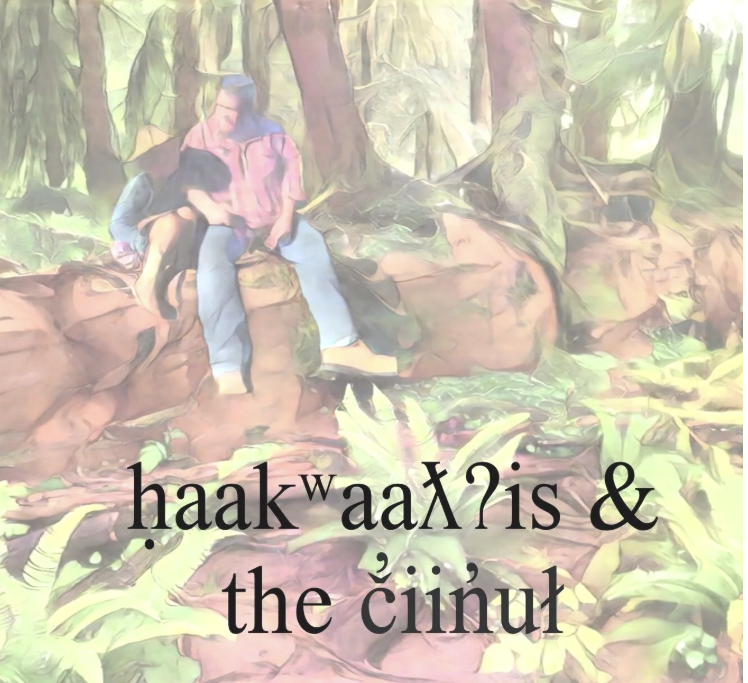
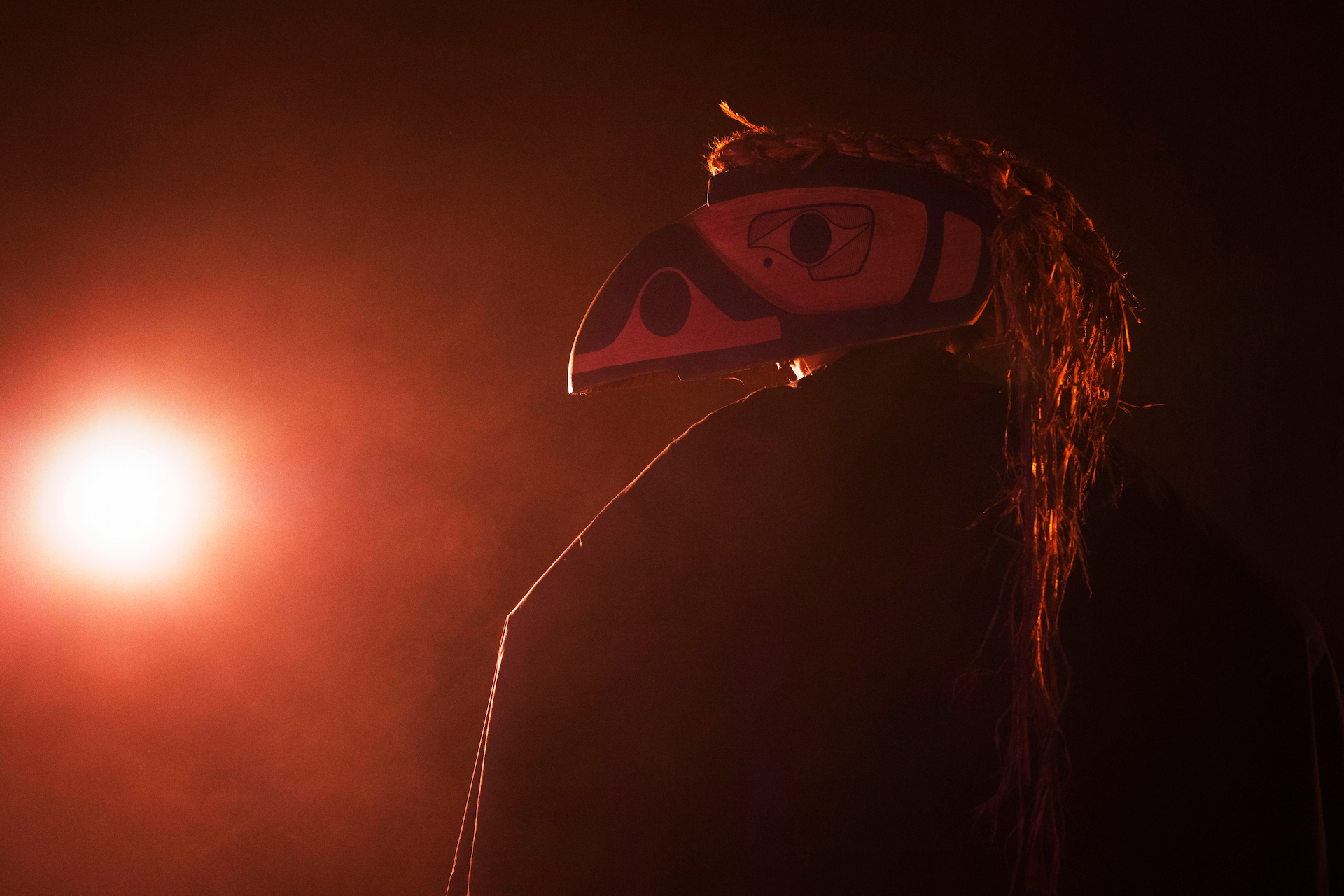
ḥaakwaaƛʔis & the č̓iin̓uł (2022) and quʔušin (raven) (2023) by Annika Benoit-Jansson, Hjalmer Wenstob, and Timmy Masso are part of a series introducing children to nuučaan̓uł language.