
September 8, 2026
Pivot Point: Committing to Right Relationship with Indigenous Peoples
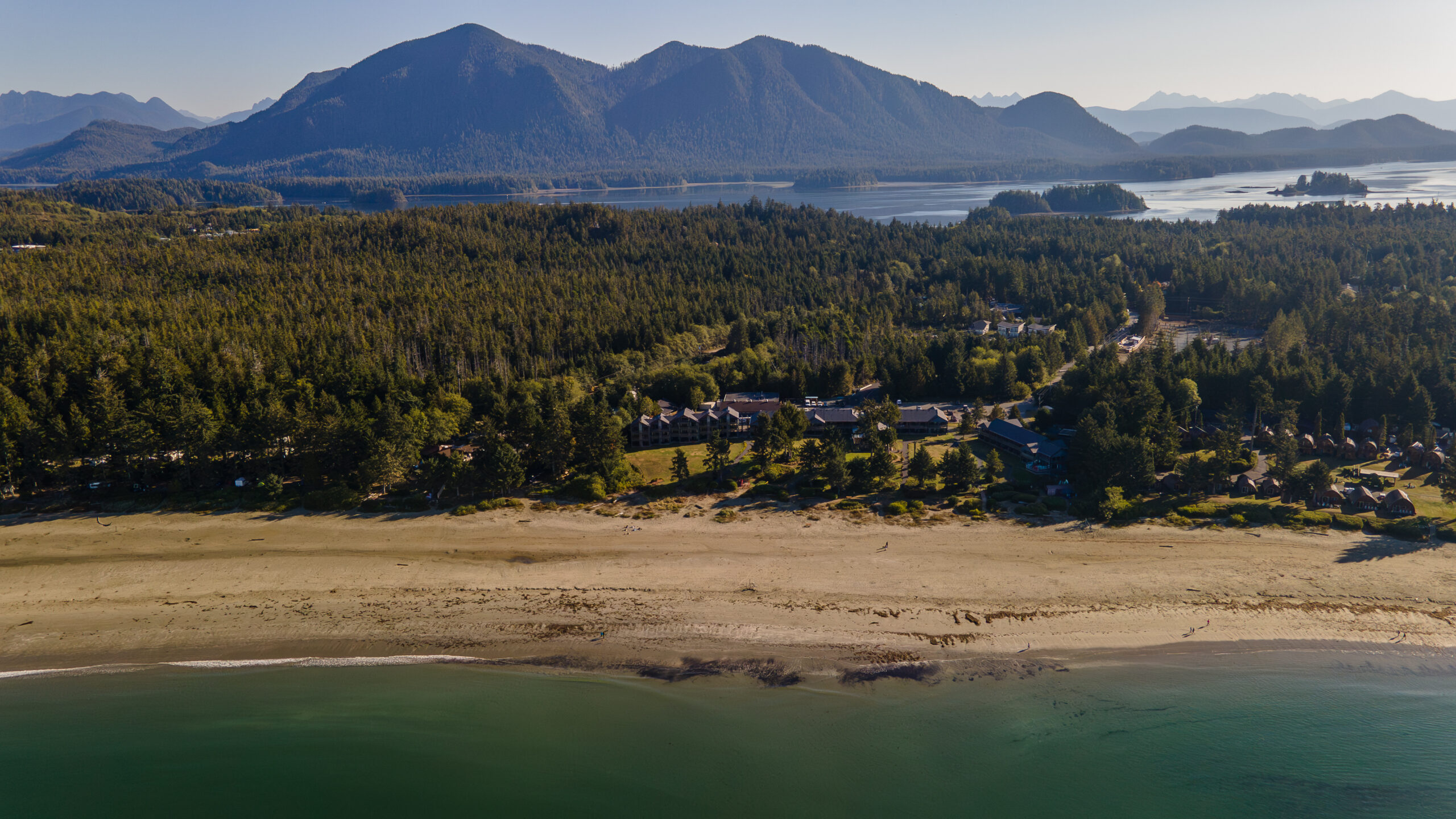
(Photo: Mike Dandurand)
By Erin Linn McMullan
“The Pathways from Settler Colonialism to Right Relationship workshop invites participants to rethink what it means to live on and visit unceded Indigenous territories, while providing a welcoming and respectful space to ask difficult questions, explore new perspectives, and build authentic relationships grounded in respect, reciprocity, and shared stewardship.”
“Each time I participate, I leave with new insights and a deeper understanding.” says Jody Kirk, CDME, Director of Destination Stewardship. “I believe Tourism Tofino has a unique opportunity to influence how people connect with place and community,”
Tofino Tourism is hosting Pathways from Settler Colonialism to Right Relationship and Indigenous sovereignty this fall with sessions on October 22nd and November 18th.
Co-created by ƛaʔuukʷiʔatḥ ƛ̓iiʔiik (Tsimka Martin) and Jeanette Sheehy, it offers a safe and compassionate space, educational tools and uplifts with ƛaʔuukʷiʔatḥ wisdom and storytelling as a fulcrum to commit to tangible action.
“Our workshop is meant to be motivating and empowering for root level change,” says Jeanette.
The “aha moment” behind this revolutionary three-hour workshop occurred when Tsimka invited Jeanette to be her guest when she sang at Pachena Bay Music Festival (2024) in July on Huu-ay-aht Nation land. Over the course of the weekend, Jeanette witnessed an outpouring of gratitude as settlers thanked their Indigenous hosts, “Thank you so much for letting us be here.” “But,” she adds, “that was where it ended.”
“So afterwards I asked Tsimka, ‘What if we created something that offered people a pathway if they wanted to put their gratitude into an action?’”

By December 2024, they were applying to Bass Coast Music festival (2025), where they could offer the workshop to a receptive audience and “party with purpose”.
Music is the throughline interwoven with their friendship and collaboration which began on a dancefloor on New Year’s Eve 2019 and involved many conversations over the years.
Together, they developed this workshop for those “who are already curious, who already are aware that something might not be right, and who genuinely desire pathways towards right relationship.”
“We want to help build the world that we want to see,” reflects Tsimka. “And a lot of that is through building the bridge of understanding different perspectives and different lived realities.”
Over that winter they collected and compiled the stories and information they wanted to include.
Jeanette, who had worked with Indigenous rights advocate Chief Freda Huson, (Dzeke ze’) from the Wet’suwet’en People in 2012, included Huson’s asks to help settler attendees build self-awareness:
- Learn about how your families first came to North America.
- Learn about settler colonialism and state violence and talk about it with other settlers.
- And learn the language your family spoke before English.
Participants not only learn about how settler colonialism functions through laws and the Truth and Reconciliation Commission Calls to Action to begin redressing these but also about affirmations of Indigenous sovereignty from Tla-o-qui-aht Tribal Parks to the recent Cowichan Tribes v. Canada decision and subsequent provincial pushback.
Contemporary challenges to Indigenous Rights and Title are also discussed. The BC NDP, who introduced the Declaration on the Rights of Indigenous Peoples Act (DRIPA) in 2019, only recently paused a proposed suspension of several sections following protest from Indigenous leaders and internal party debate.
This proposed overhaul was in response to the Gitxaała decision by the BC Supreme Court determining the province’s mineral claims’ process were inconsistent with DRIPA. This repeal would have provoked a confidence vote, and potentially a snap election.

Simultaneously, ƛaʔuukʷiʔatḥ are working to uphold sovereignty after the province reissued mineral exploration permits despite opposition for the Tranquil Creek watershed within Tla-o-qui-aht Tribal Parks—an Indigenous Protected and Conserved Area (IPCA). Unified support from District of Tofino Mayor and council, Tourism Tofino, and Tofino Chamber of Commerce has been expressed in a letter writing campaign to the BC government to protect the affected areas in both the ƛaʔuukʷiʔatḥ and in the ʕaḥuusʔatḥ haḥuułii.
Tsimka describes the grounding force of the workshop as “an anchor of truth”.
For Indigenous participants, this workshop is always prefaced with a reminder that they can step away at any time and access resources such as the Kuu-us Crisis line or reach out to Tsimka and Jeanette afterwards for further discussion or debrief.
Because so much of the material is heavy and the arc of the workshop involves such a profound emotional journey, Tsimka offers, “It was really clear that we wanted to be able to assist people into action coming out of it.”
The uplifing ƛaʔuukʷiʔatḥ transformer story would provide that key pivot point. “I had wanted to learn that transformer story for years,” shares Tsimka, adding, “I had learned it in English, and I still want to learn it in my language.”
A playful and voluntary commitment ceremony encourages participants to share their self-directed commitments with the group.
“Often there’s a good energetic shift because of the commitments that people make at the end that is so spirit lifting,” says Tsimka. “And wonderful to be part of having that happen.”
This workshop encourages a practice of self-reflection and continuing to unlearn and grow with an accountability buddy, as well as reviewing Indigenous-driven resources.
An entry point includes Native Land Digital’s Map to help you identify whose land you’re living on or visiting and the Treaty Map by the Yellow Head Institute offering Indigenous perspectives on treaties from 1763 to the present.
The workshop prepares you to go beyond land acknowledgement into tangible action.
A significant takeaway is to connect with people in a good way when learning directly from Indigenous communities. As Tsimka reminds us, it’s “a good practice to arrive with a gift” and a “good spirit.”
When Tsimka and Jeanette put out a callout for hosting the workshop, Tourism Tofino immediately responded, along with an invitation to deliver the keynote at the 2026 joint spring AGM with Tofino Chamber of Commerce.
“I really appreciated Jody (Kirk) at Tourism Tofino,” says Tsimka, “the way that she framed it being a baseline of knowledge for everyone that’s in the area.”
A first step towards visiting or living in n̓ačiqs (Tofino) respectfully begins by taking the ʔiisaak Pledge, which includes four foundational ƛaʔuukʷiʔatḥ teachings.
Take it a step further by contributing to Tla-o-qui-aht Tribal Parks and supporting Allied businesses. Write a letter to help protect the ƛaʔuukʷiʔatḥ and ʕaḥuusʔatḥ ḥaḥuułi which have been stewarded by nuučaańuł Peoples since time immemorial.
And, if you’d like to host or attend an upcoming workshop, reach out to Tsimka and Jeanette via the website Here.